
Facteus U.S. consumer card panel is sourced from more than 20 bank, credit union and fintech partners. Our data captures 185 million active cards, is representative of geographic and income distribution of U.S. shoppers, and is scaled, debiased, and benchmarked daily against government and public company data – so you get data you can trust every time.
Transactions are captured in-store, online and from mobile wallets and contain information about transaction amount, location, merchants and the cardholder.
Cardholders
Spending
Correlation
Revenue MAPE
for Scaling
Data
Available
Lag
Privacy & Security
Secure from the start. No PII. Ever.
Facteus never receives personally identifiable information (PII) from our data partners. As an additional privacy safeguard, all transactions undergo a slight modification to preserve privacy while maintaining 99.9% statistical significance. The result is a dataset that preserves analytical integrity without compromising individual privacy.
Fully compliant with SOC2, CCPA, GDPR, and other regulations
Pseudonymized card data — no raw card numbers or direct PII
Enterprise-level security controls & access management
Designed for safe use in insights, analytics & advertising
Calibration & Scaling
Facteus employs a daily calibration process to ensure accurate representation of consumer spending across all geographies and merchant categories.
Capture Rate Calculation
We measure how much panel shoppers spend at specific store locations relative to each store’s total daily revenue.
Geographic Grouping
We group stores by local geography to create regional capture rates that reflect local spending dynamics.
Rolling Window Smoothing
We apply rolling window methodology to account for anomalies and ensure stability in capture rate calculations.
National Benchmarking
We compare scaled local totals against known national revenue – adjusting each geography to align with national benchmarks.
Validations
Strong alignment with U.S. spending patterns
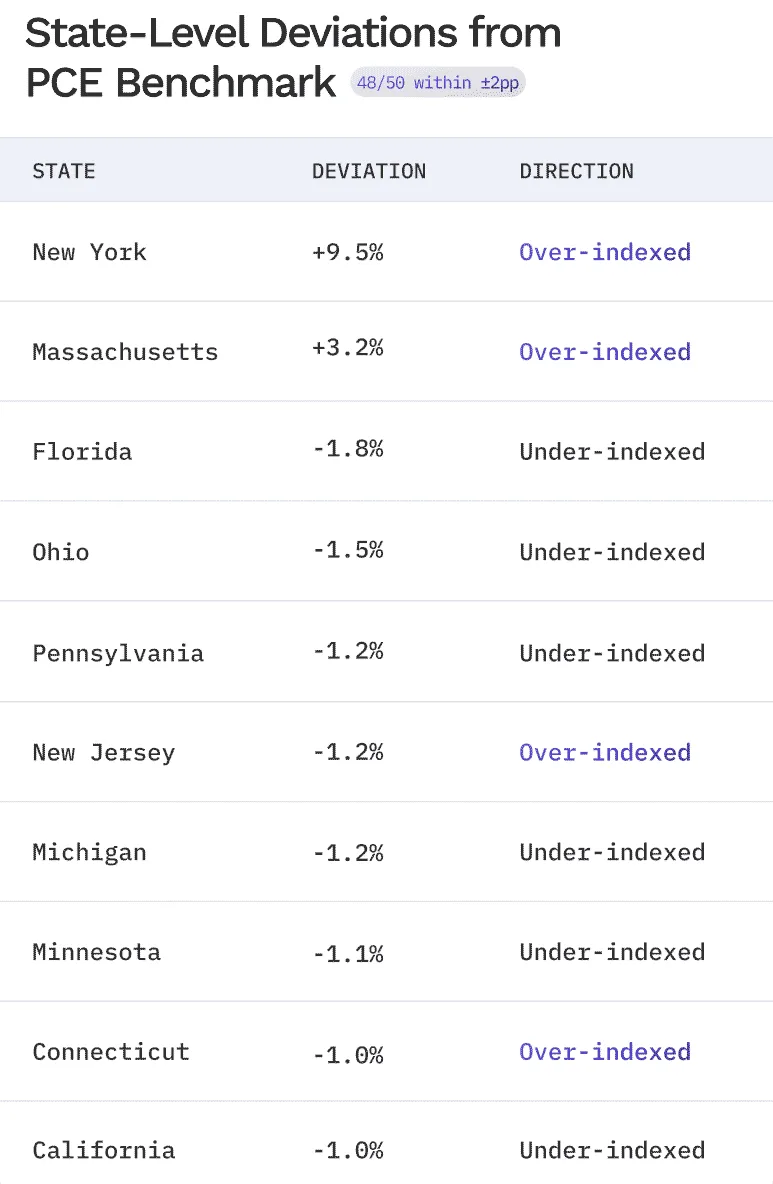
When compared against U.S. Bureau of Economic Analysis (BEA) Personal Consumption Expenditures (PCE) data, 48 of 50 states fall within +- 2 percentage points of expected PCE share.
When significant variations exist, they are addressed through the daily scaling and debiasing process, which adjusts regional capture rates against known national benchmarks to ensure accurate representation of true market spending patterns
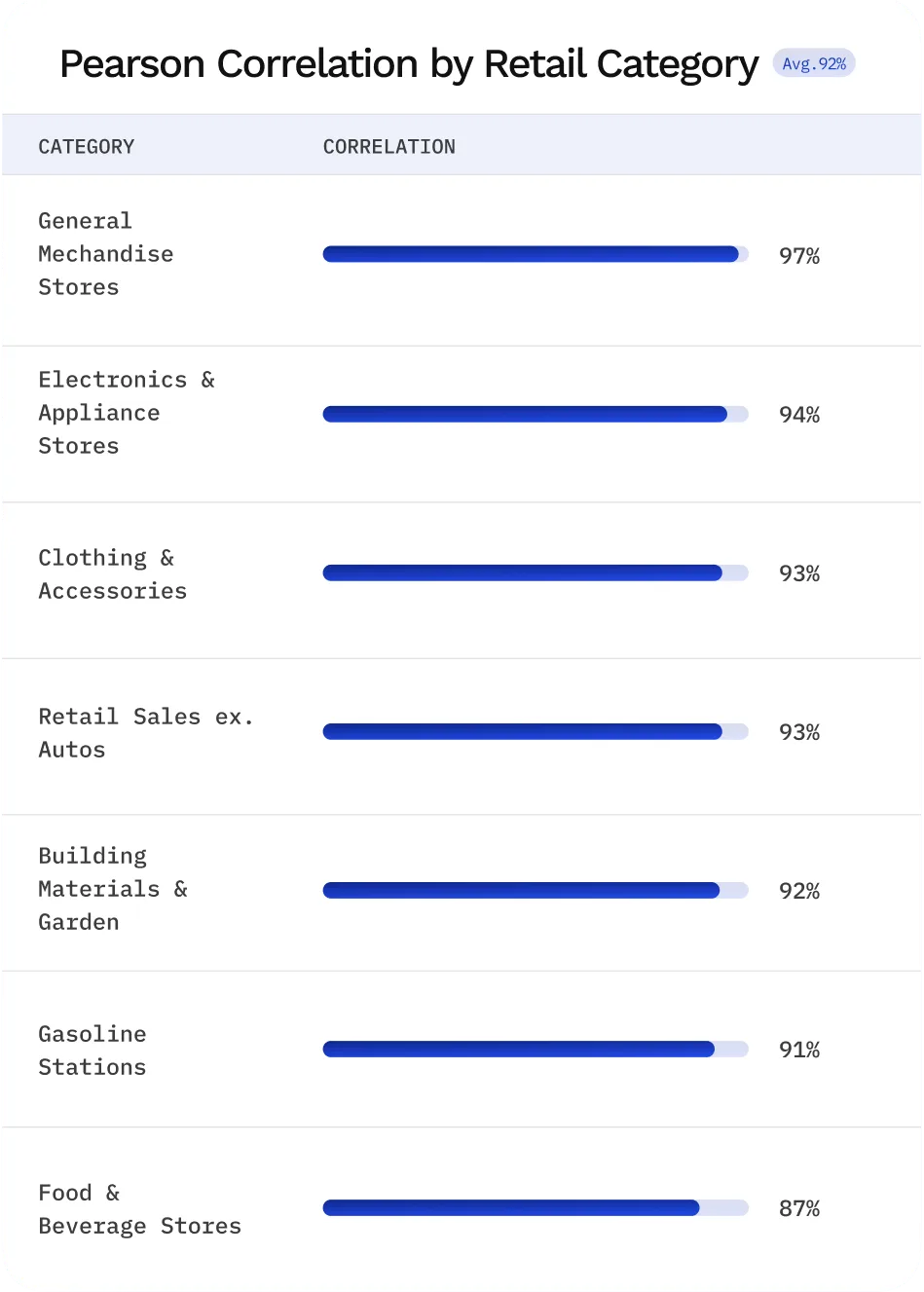
92% average correlation with U.S. Census Monthly Retail Sales
When compared against U.S. Census Bureau Monthly Retail Sales data, strong correlations exist, validating the strength of visibility Facteus data provides.
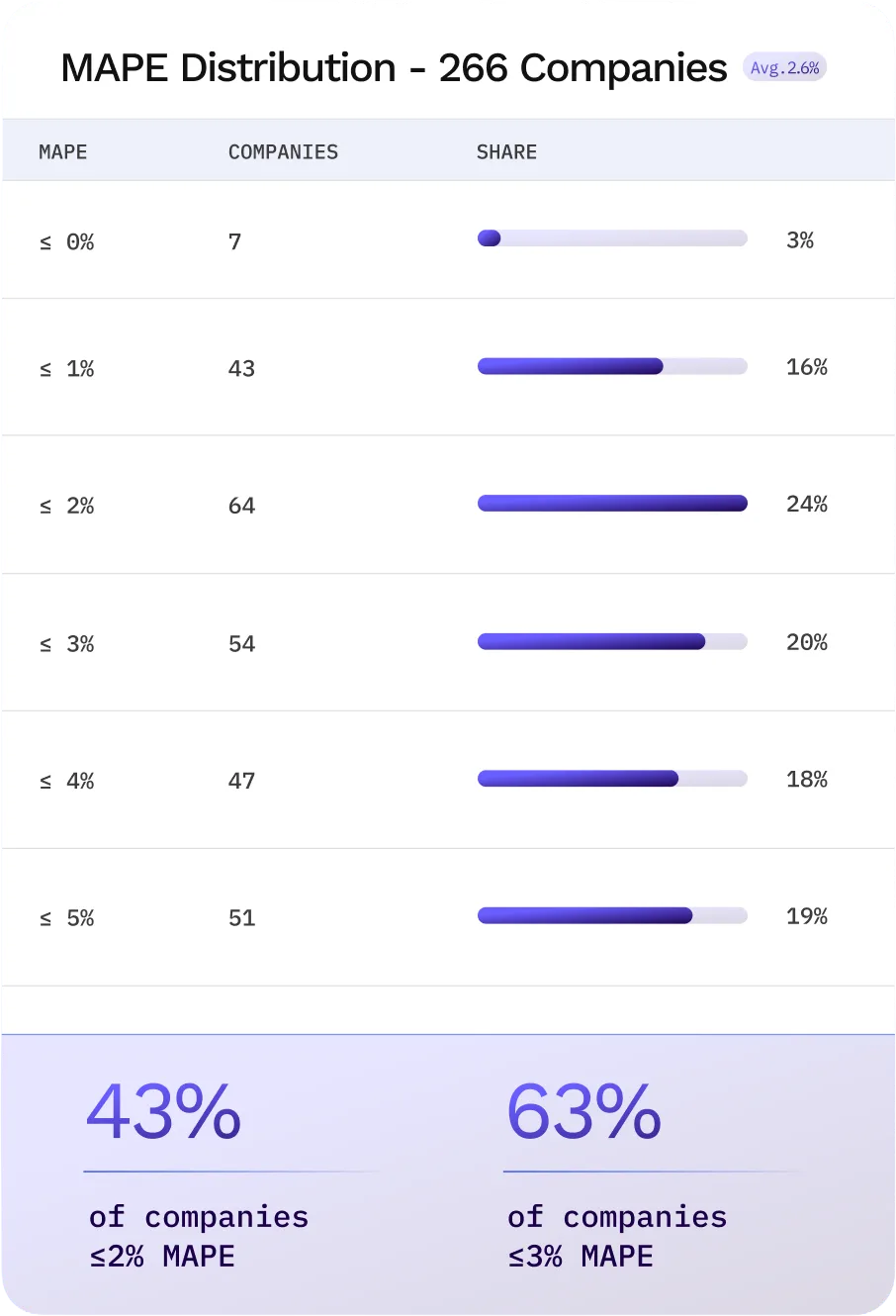
2.6% average MAPE across 266 publicly traded companies
Facteus-estimated revenue change is compared against official company-reported quarterly results over a trailing eight-quarter period. Mean Absolute Percent Error (MAPE) measures the accuracy of these estimates (lower is better).
What This Means for You
Stay up-to-date on consumer spending and the competitive landscape with ongoing insights from Facteus.